A real household · Western Australia

First solar.
Then storage.
A plan that grew.

This family of four built their home energy system in stages, responding to evening routines, winter comfort and changing plans.

See the actual bills ↓Explore their journey

$89.41

on the latest supplied 58-day bill9 Jul–4 Sep 2026 · Before the later EV-charging upgrade.
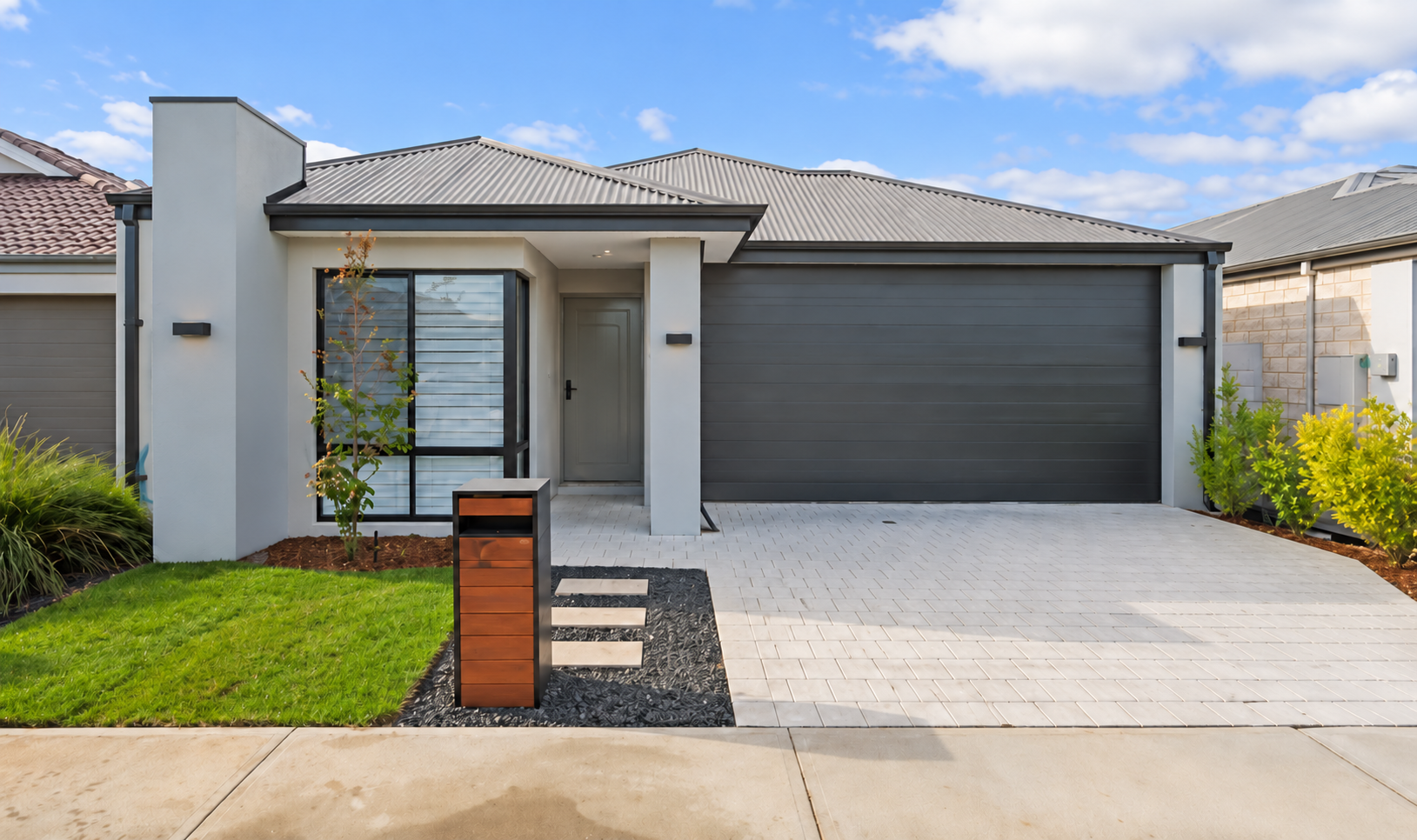
Front facade of the Western Australian family home
The family home in Western Australia.

01 / The home & the upgrade

A north-facing roof.
Busy evenings indoors.

When the family moved in during May 2025, their detached home had room for solar. Their daily routine made the evening the harder part.

Most family members were away during daylight hours. After sunset came dinner on an induction cooktop, heating or cooling, and the rest of family life. They wanted to manage bills without asking everyone to give up comfort.

Four-person householdEvening demandElectric heating & cookingRoom to grow
MAY 2025 · START WITH SOLAR11.73kW on the roofInstalled shortly after the family moved in.
AUGUST 2025 · ADD STORAGE15kWh batteryThree Growatt APX modules at first.
DECEMBER 2025 · EXPAND30kWh batteryTotal nominal capacity after the second stage.

The installed solution

Start with what helps now.
Leave room for what comes next.

11.73kWRooftop solar
30kWhNominal storage after expansion

Sunterra first installed solar with a Growatt inverter. The family added battery storage three months later and expanded it at the end of the year, rather than buying the final system all at once.

The right size and sequence for another home depend on its roof, usage, budget and future plans.
02 / Why timing matters

The family’s day changes
when the sun goes down.

Rooftop solar generates in daylight, but this household’s heaviest routines happen later. Storage gave them another way to use available solar after everyone returned home.

01 · GENERATE

Use the roof

The north-facing metal roof made rooftop solar a practical first step when the family moved in.

02 · KEEP FOR LATER

Support the evening

Battery storage was added after the first winter, when the family’s demand continued after sunset.

03 · ADAPT

Plan the next need

After expanding storage, the project record says the family added home EV-charging equipment in September 2026.

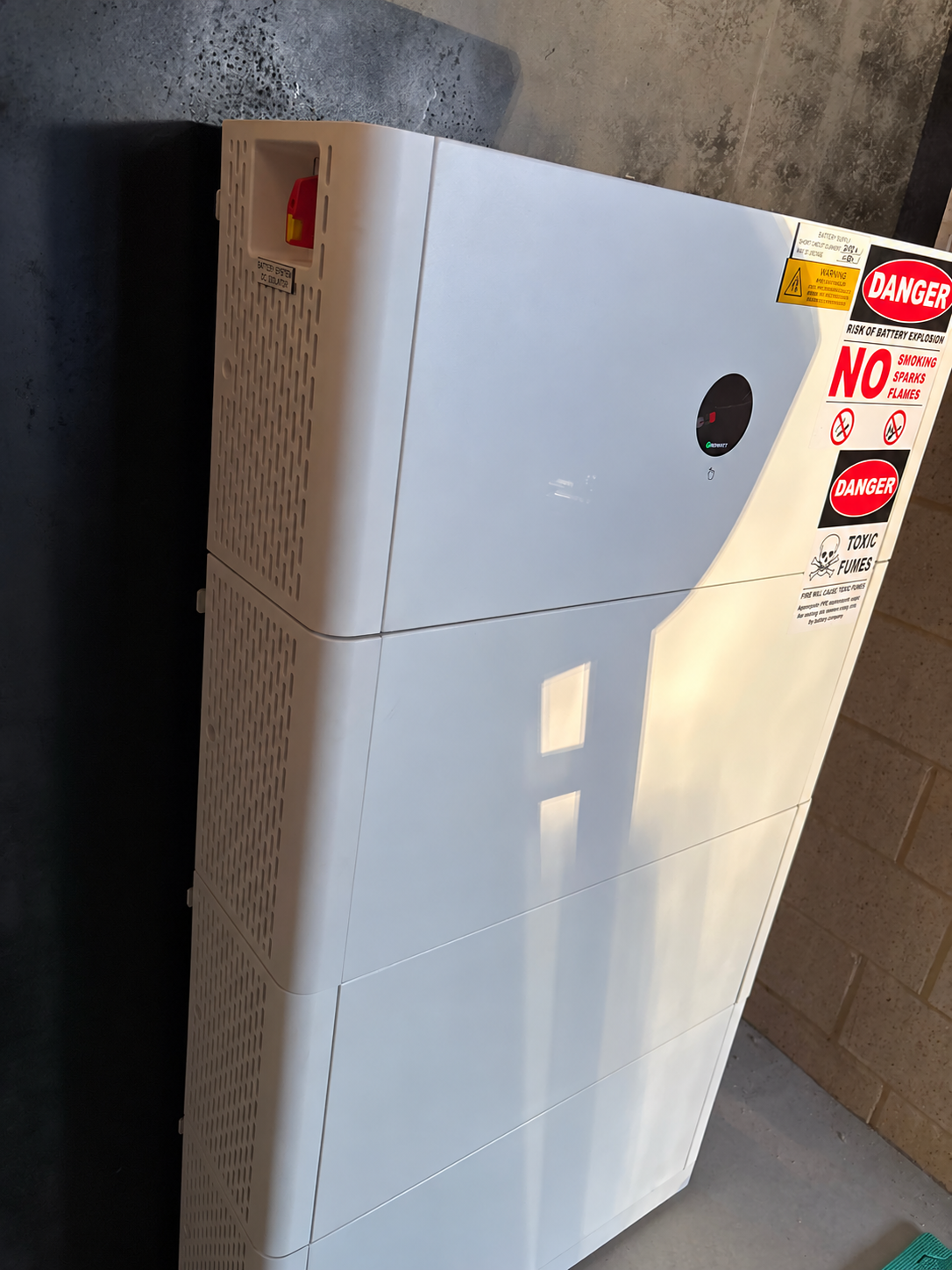
Close view of the Growatt battery installed at the family home

The real installation

One stage at a time.

A close view of the real Growatt installation. The later storage expansion and EV equipment are not shown in this photograph.

Storage capacity is nominal. The photographs and bills do not establish backup scope or exactly how the battery operated.

03 / The actual bills

What made up
the $89.41 bill?

The latest supplied statement covers 9 July–4 September 2026. There was no carried balance: the period’s charges and the amount to pay were both $89.41.

Daily supply charges58 days connected to the grid$62.87
Grid electricity used60.896kWh imported in the period+ $18.41
GST+ $8.13

This bill · amount to pay

$89.41

The fixed supply charge was the largest part of this bill. It predates the September EV-charging installation.

JUL–SEP 2025 · 58 DAYS$278.04Period charges · 651kWh imported · battery added partway through.
JUL–SEP 2026 · 58 DAYS$89.41Period charges · 61kWh imported · after storage expansion.

These are real bills from similar winter windows at the same home. Weather, household use, tariff changes and the timing of the upgrades also matter; the difference cannot be assigned solely to the battery. Exports are recorded in kWh on the statements, but no dollar feed-in credit appears in these bill totals.

View all eight supplied billing periods
Synergy electricity statements · AUD · “This bill” is separate from carried account credits.
Supply period Grid imports New charges Amount to pay / account result
8 May–7 Jul 2025 889kWh $390.91 $301.94 after opening credit
8 Jul–3 Sep 2025 651kWh $278.04 $278.04
4 Sep–3 Nov 2025 191kWh $132.68 No payment; $17.32 account credit
4 Nov 2025–5 Jan 2026 54kWh $92.35 $75.03 after prior credit
6 Jan–6 Mar 2026 22kWh $76.91 $76.91
7 Mar–8 May 2026 74kWh $97.09 $97.09
9 May–8 Jul 2026 148kWh $119.14 $119.14
9 Jul–4 Sep 2026 61kWh $89.41 $89.41

The first statement included a meter reprogramming charge and an opening credit. The September–November 2025 account result also reflects a $150 government bill-relief credit; it was not a zero-charge period. Import figures are electricity purchased from the grid, not the home’s total use.

04 / The Sunterra approach

Start with the household.
Build the solution around it.

The family’s project did not have to be one decision on one day. Their solar, battery expansion and later EV plans followed the way the household changed.

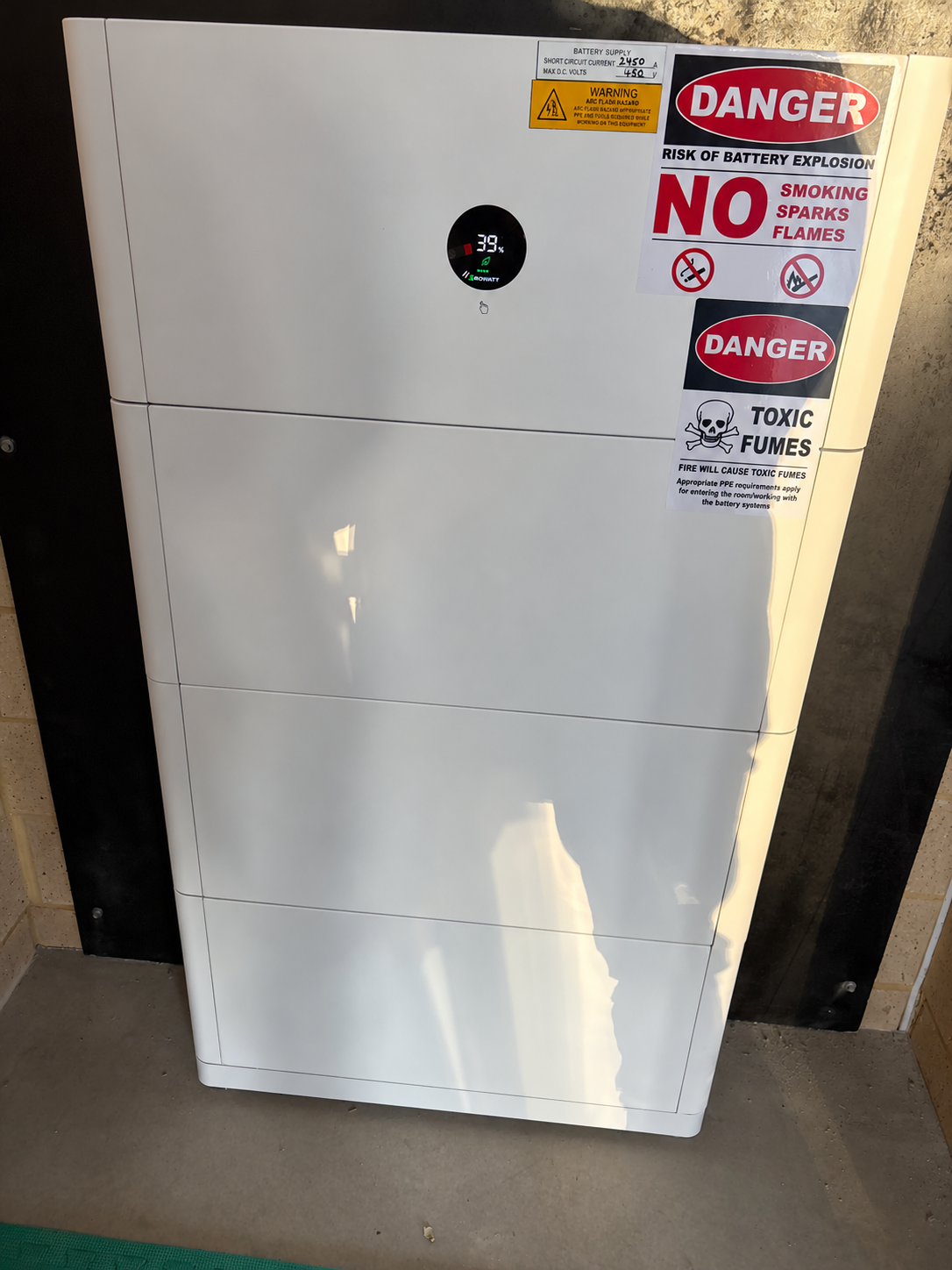
Growatt battery installed at the family home
The first battery installation at this home.

In August 2025, the family added its first 15kWh of storage. This installation photo sits alongside the story of a system that later grew to 30kWh: the family revisited the plan as their needs and bill history became clearer.

Understand the routine

Look beyond the annual total. When a family uses electricity matters, especially for evening heating and cooking.

Choose a sensible first step

Match the initial system to the roof, budget and current needs, while checking how future additions could fit.

Revisit the plan

When needs change, review real bills and equipment compatibility before expanding storage or adding EV charging.

05 / Could it work for you?

A growing household?
Start with your own numbers.

Does the latest bill include EV charging?

No. The latest supplied bill ends on 4 September 2026. The customer story records the EV-charging upgrade later that month, so these bills do not show its running cost.

Why was there still a bill with so little grid electricity used?

The home still paid a daily supply charge. On the latest statement it was $62.87 before GST, compared with $18.41 for grid electricity used.

Were the exported kilowatt-hours paid as feed-in credits?

The statements list electricity exported, but their charge summaries do not show a dollar feed-in credit. We have not counted export earnings in this case.

Would I need a 30kWh battery or get the same bill?

Not necessarily. Your roof, household use, tariff, weather, budget and future plans determine what may suit you. This family’s results are historical, not a forecast or guarantee.

Does the battery provide whole-home blackout backup?

The supplied bills and photographs do not establish backup scope. Ask for supported circuits, limits and reserve settings to be specified in a proposed design.

Your home · Your energy plan

Find out what could
work for your home.

Talk to Sunterra about solar, storage and a plan that can grow with your needs.

Request a free quote ↗

Or call 1800 312 979

Have these ready for the conversation

  • A recent electricity bill
  • Your roof and existing solar details
  • When your household uses energy
  • Your budget and future plans

Call Now Button