Supervise high-risk work.
Structured pre-start planning, validated work methods and visible supervision across civil, mechanical and electrical disciplines.

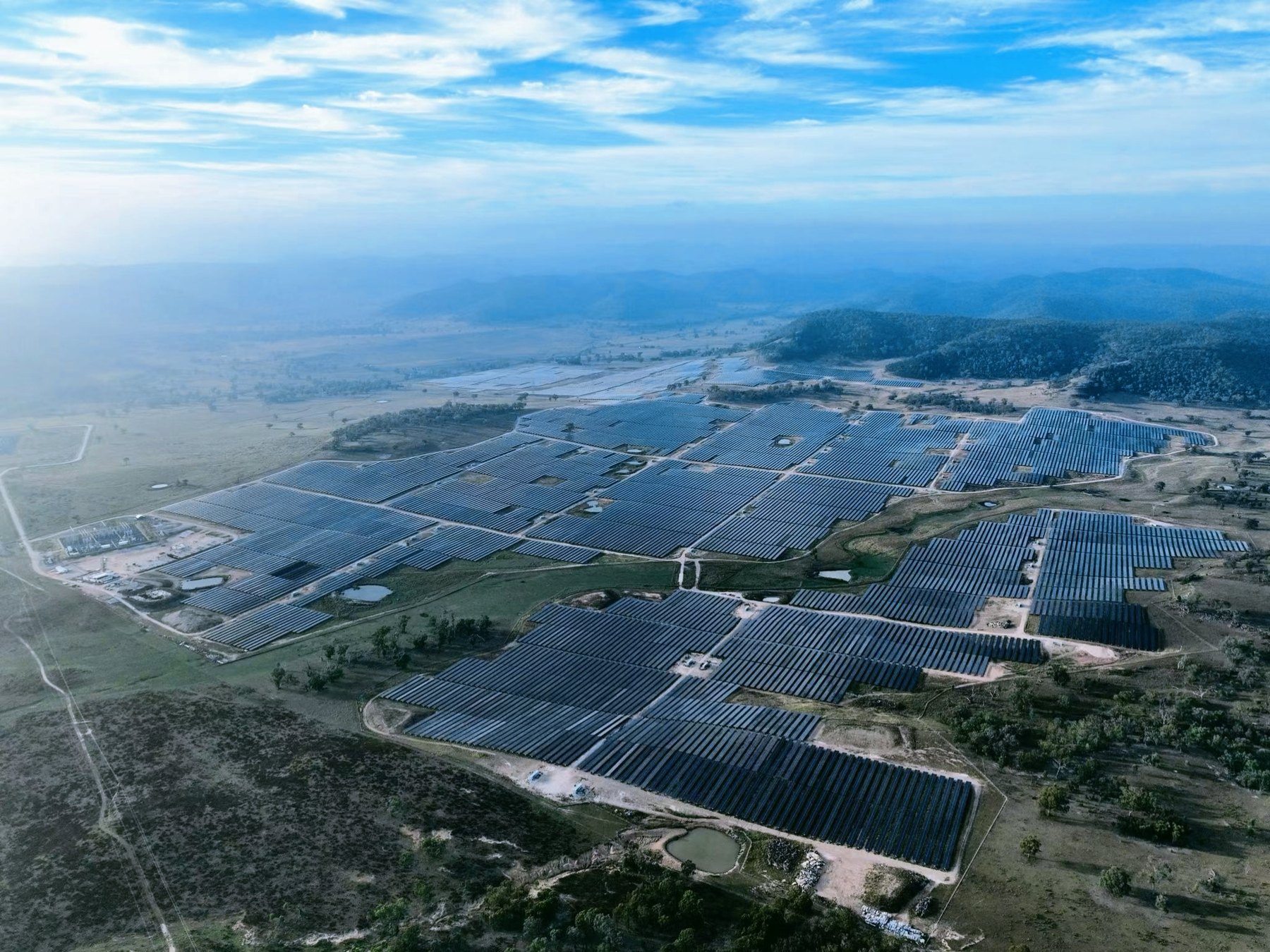
WOLLAR SOLAR FARM · NEW SOUTH WALES
From complex ground conditions to grid integration. EPC delivery and ongoing operations & maintenance for a major Australian solar asset.
Explore the project storyTHE PROJECT IN A MINUTE
Wollar turns sunlight into electricity for the NSW grid. Delivering it required engineering, construction and grid compliance to move together.
Located approximately 7 km south of Wollar, the project brings together thousands of trackers, a distributed inverter system and medium-voltage collection infrastructure. Sunterra’s role connects EPC delivery with ongoing operations and maintenance.
Follow the delivery journeyFROM ENGINEERING TO OPERATION
Decisions made in design affect installation, commissioning and years of maintenance. Wollar required those interfaces to be managed across the project.
Coordinate geotechnical, drainage and structural design with protection, grid modelling and plant controls.
Identify long-lead equipment, verify factory readiness and sequence deliveries around installation needs.
Bring civil, piling, mechanical and electrical work fronts together under coordinated supervision and quality checks.
Validate controls and electrical performance through staged energisation, grid testing and handover.
Continue into O&M, with routine inspection, planned maintenance and site stewardship supporting ongoing operation.
Sunterra Energy Pty Ltd is the solar farm’s EPC and O&M contractor. The owner identifies TransGrid as managing substation construction; grid delivery involved multiple parties.
THE CHALLENGES BEHIND THE DELIVERY
Three parts of the project show how engineering decisions, site execution and stakeholder coordination came together.
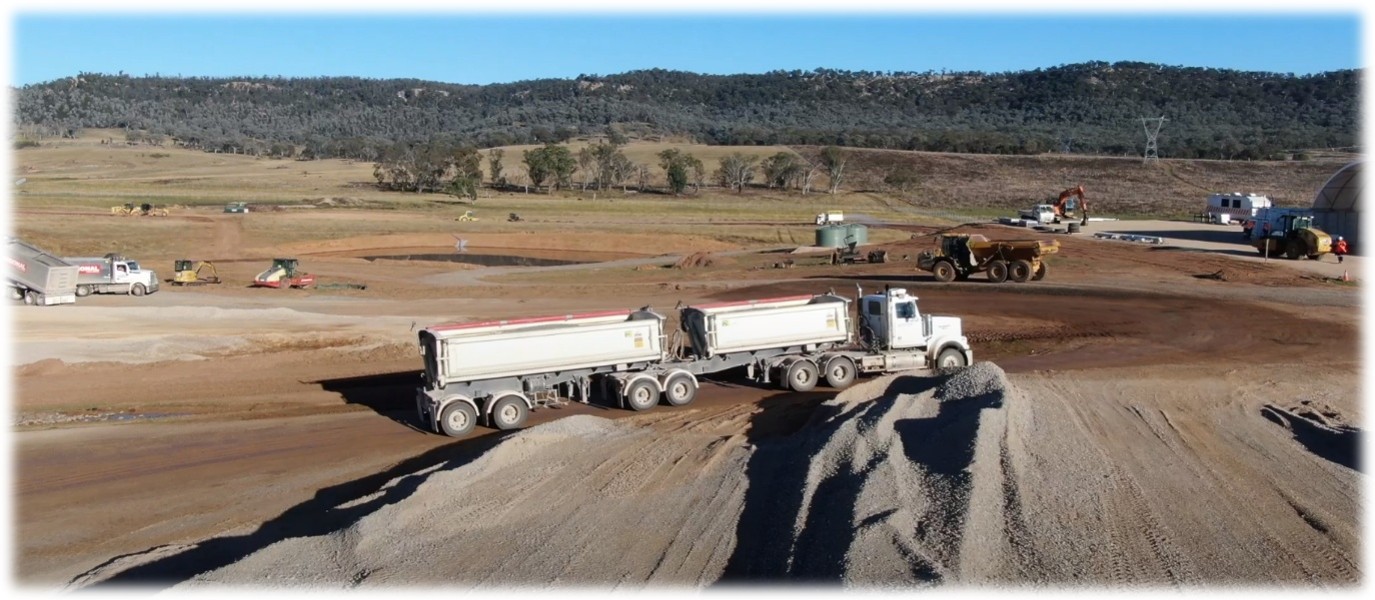
Foundations, access and drainage planned together.
01 / TURNING SITE CONDITIONS INTO A BUILDABLE PLAN
Undulating terrain, drainage sensitivities and changing geotechnical conditions complicated foundations and site access.
Coordinate foundations with drainage and erosion controls. Use GPS-integrated piling systems to improve positioning, supported by engineering coordination and site quality checks.
Sunterra’s project case study records piling productivity of approximately 400 piles per day, despite variable ground conditions.
COORDINATING THOUSANDS OF COMPONENTS
02 / SYNCHRONISING SUPPLY WITH SITE READINESS
Equipment manufacturing, logistics and parallel construction activities had to align across a large site, with peak mobilisation of approximately 400 personnel.
Identify long-lead items early, verify equipment at the factory and maintain material traceability. Sequence deliveries and use a central pre-assembly yard to support parallel mechanical and electrical installation.
Structured supervision and quality hold-points connected supply chain planning with installation readiness and consistent execution.
A STAGED PATH TO FULL OUTPUT
03 / MAKING THE PLANT WORK WITH THE GRID
The large string-inverter deployment introduced complex interfaces between plant controls, protection and grid performance modelling, including multiple R1 submission cycles.
Align technical validation and coordinate stakeholders through the R1/R2 modelling and testing program, progressing towards full-capacity generation through staged commissioning.
Wollar reached 100% generation on 23 June 2025 after Stage 3B testing. Further Hold Point 3 testing followed as commissioning continued.
DELIVERY WITH ACCOUNTABILITY
Large-scale delivery depends on daily controls as much as technical design.
Structured pre-start planning, validated work methods and visible supervision across civil, mechanical and electrical disciplines.
Integrate drainage protection, erosion controls, inspections and audit oversight into construction sequencing. Reinforce site controls and workforce training as issues are identified.
Address access control, supply chain transparency and cyber security alongside plant delivery, with specialist support for security planning.
FROM HANDOVER TO ONGOING CARE
Sunterra’s ongoing O&M role extends the delivery relationship into the operating life of the solar farm.
Equipment. Site conditions.
People who know the project.
Maintain the plant.
Look after the whole site.
The owner reports that locally employed staff have transitioned into on-site O&M. Its published operating activities cover both equipment condition and the environment around it.
Regular checks of solar panels and infrastructure to support safe, effective operation.
Vegetation and weed management aligned with the site’s Biodiversity Management Plan.
Pest management with neighbours and ongoing engagement with the Rural Fire Service on bushfire arrangements.
Site activities described in BJEI Australia’s 2025 Best Practice Charter report. These describe the owner’s operating program; individual service responsibilities follow the applicable contracts.
SUNTERRA’S O&M SERVICE PORTFOLIO
Capabilities that support an asset through its operating life. Services and response commitments are defined in each project’s O&M agreement.
Performance data, alarms and diagnostics help identify issues and inform maintenance priorities.
Scheduled inspections and servicing support equipment condition and availability.
Fault investigation, response and rectification address equipment problems as they arise.
Drone thermal imaging supports panel-level fault detection and targeted investigation.
Critical component planning and stock management support maintenance readiness.
Monthly and annual reports bring together generation, availability, maintenance records and trends.
An illustrative service workflow. Activities follow the asset’s maintenance plan.
PREPARING FOR THE OPERATING PHASE
The owner’s September 2025 update also reported construction of an on-site warehouse to hold spare parts for ongoing operations and maintenance.
THE VALUE AFTER ENERGISATION
Wollar’s value includes electricity generation, ongoing asset care and a lasting relationship with the local community.
By September 2025, the owner reported that the project’s highest daily generation had exceeded 1,600 MWh.
A reported daily high, not an average or a full-year result.
Beijing Energy International’s September 2024 grid-connection announcement estimated annual clean electricity generation of 546 million kWh.
A forward-looking estimate, not verified annual production.
Ongoing inspection, maintenance and site management support the plant’s long-term operating needs.
The owner’s Community Fund offers up to A$100,000 annually, indexed to CPI, building on more than A$40,000 of construction-phase sponsorship.
KEY PROJECT MILESTONES
Construction, first energisation and full-capacity testing are distinct stages in a utility-scale project.
Construction begins, following earlier access and preparatory works.
The project connects to the grid, opening the next stage of commissioning.
Stage 3B testing leads to the owner’s 100% generation milestone.
The owner reports final testing progress and spare-parts warehouse construction.
Dates follow the owner’s published project updates. The full-capacity milestone is separate from formal commercial operation and final completion.
Engineering and construction descriptions draw on Sunterra’s Wollar project case study. Public owner updates provide the milestones and generation figures below.
YOUR NEXT ENERGY PROJECT
Bring your site, grid requirements and operating priorities. Let’s discuss an energy project built around them.
