Use the roof
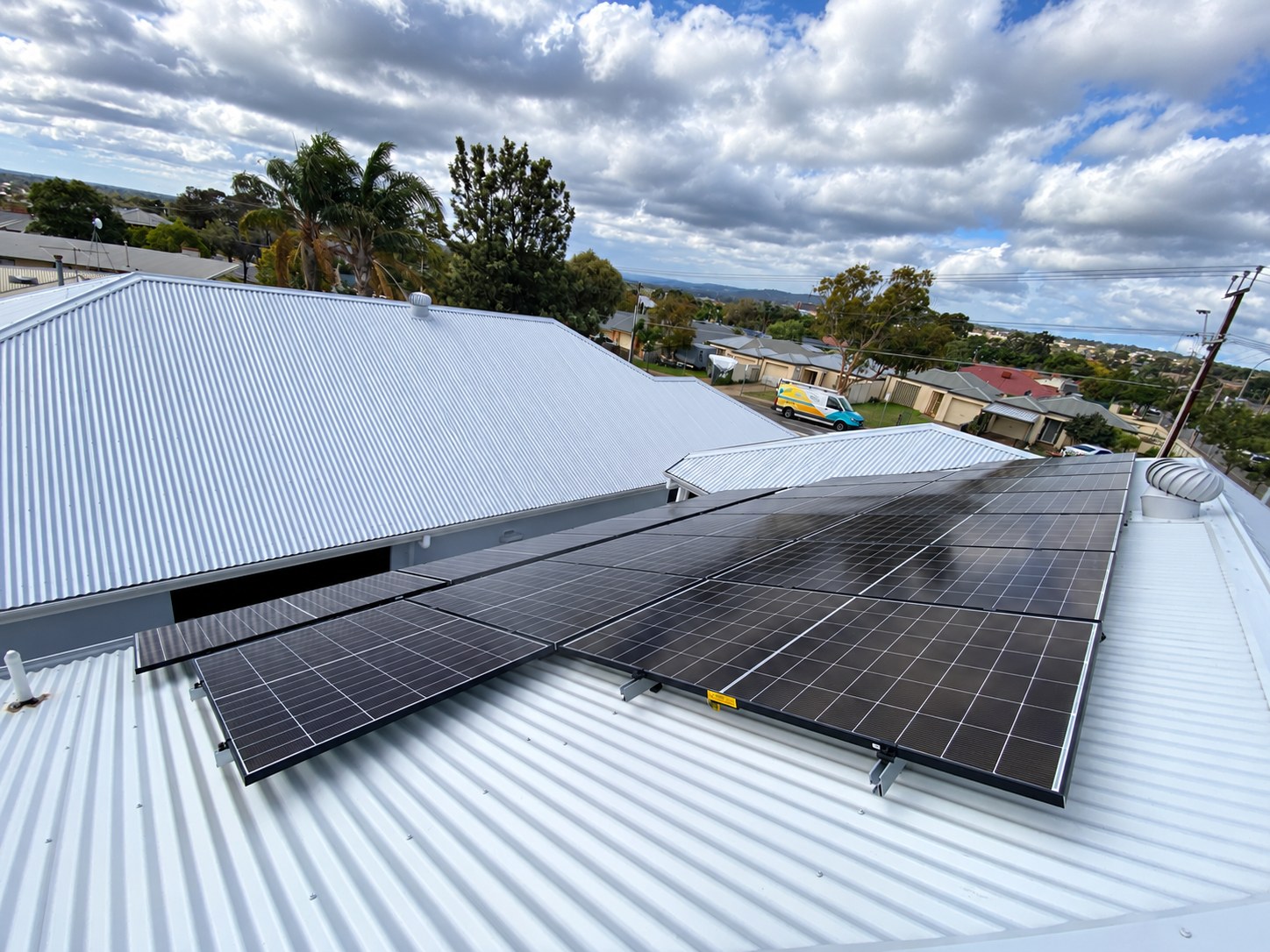
Panels across the metal roof make electricity while sunlight is available, including for a home that often has someone in it during the day.

A real household · South Australia
Moving gave this family of four a chance to plan rooftop solar, a battery and electric-vehicle charging around the way they actually live.
See the actual bills ↓Explore the home
01 / The home & the upgrade
The family came from a rental without solar. Their new home offered the chance to make a different start.
Someone is often home during the day, while late afternoons bring cooking, cooling and the needs of a family of four. An electric vehicle added another reason to think about when electricity would be available.
The installed solution · March 2026
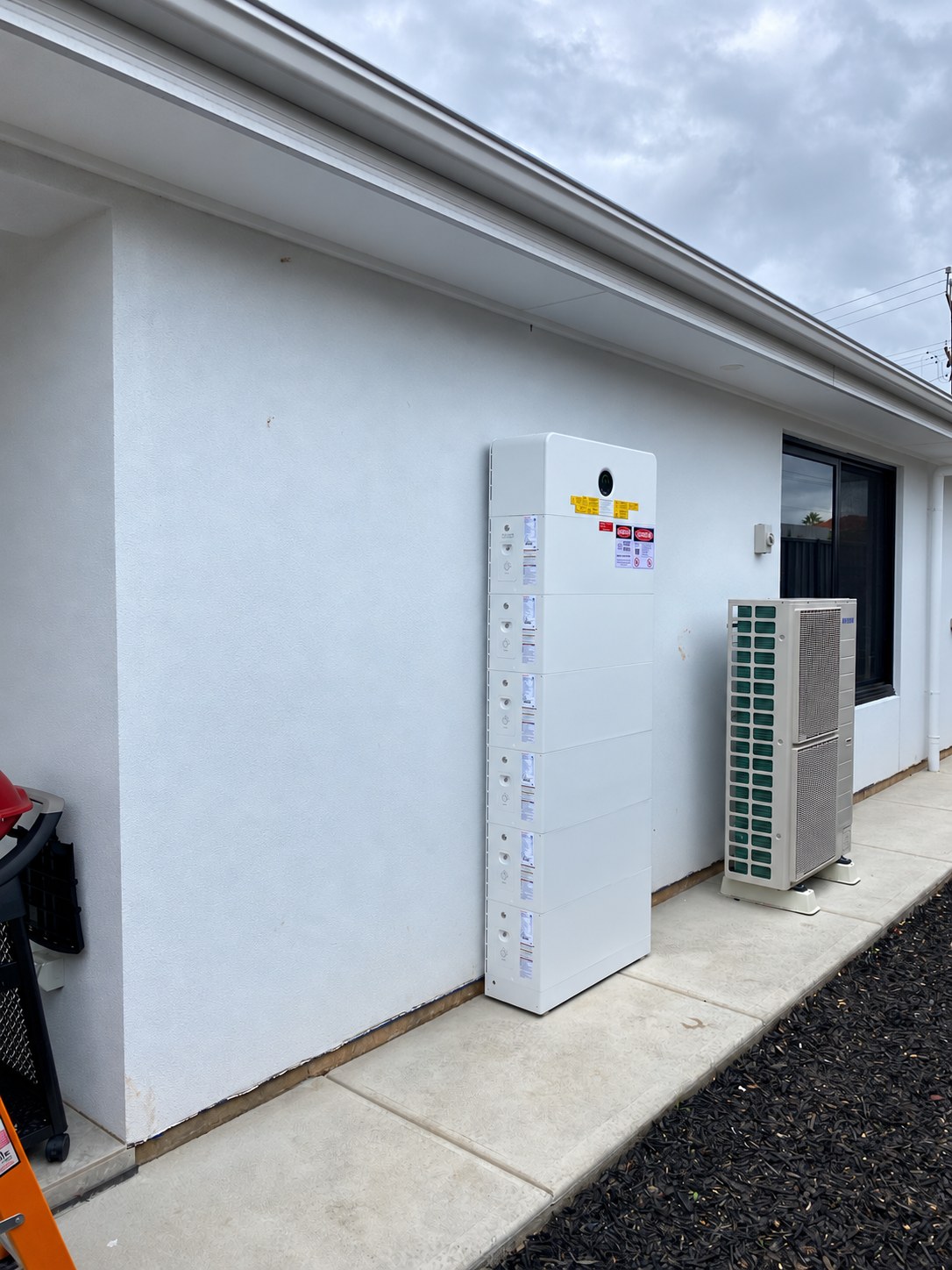
On the new home’s unshaded metal roof, Sunterra installed 40 solar panels. A GoodWe battery system, hybrid inverter and home EV charger completed the project.
The equipment was planned as one household solution. Its size reflects this family’s roof, routine and goals; another home may call for something quite different.
02 / Why the daily pattern matters
The family wanted their new home to use solar through the day, store available energy for later and make room for EV charging. The electricity bill shows what still came from the grid; it cannot show every appliance’s use.
Panels across the metal roof make electricity while sunlight is available, including for a home that often has someone in it during the day.
The battery gives the household another way to use available solar later, when family routines move into the evening.
A dedicated 7kW home charger was installed as part of the project. The right charging schedule depends on household use and the electricity plan.
The home in the details
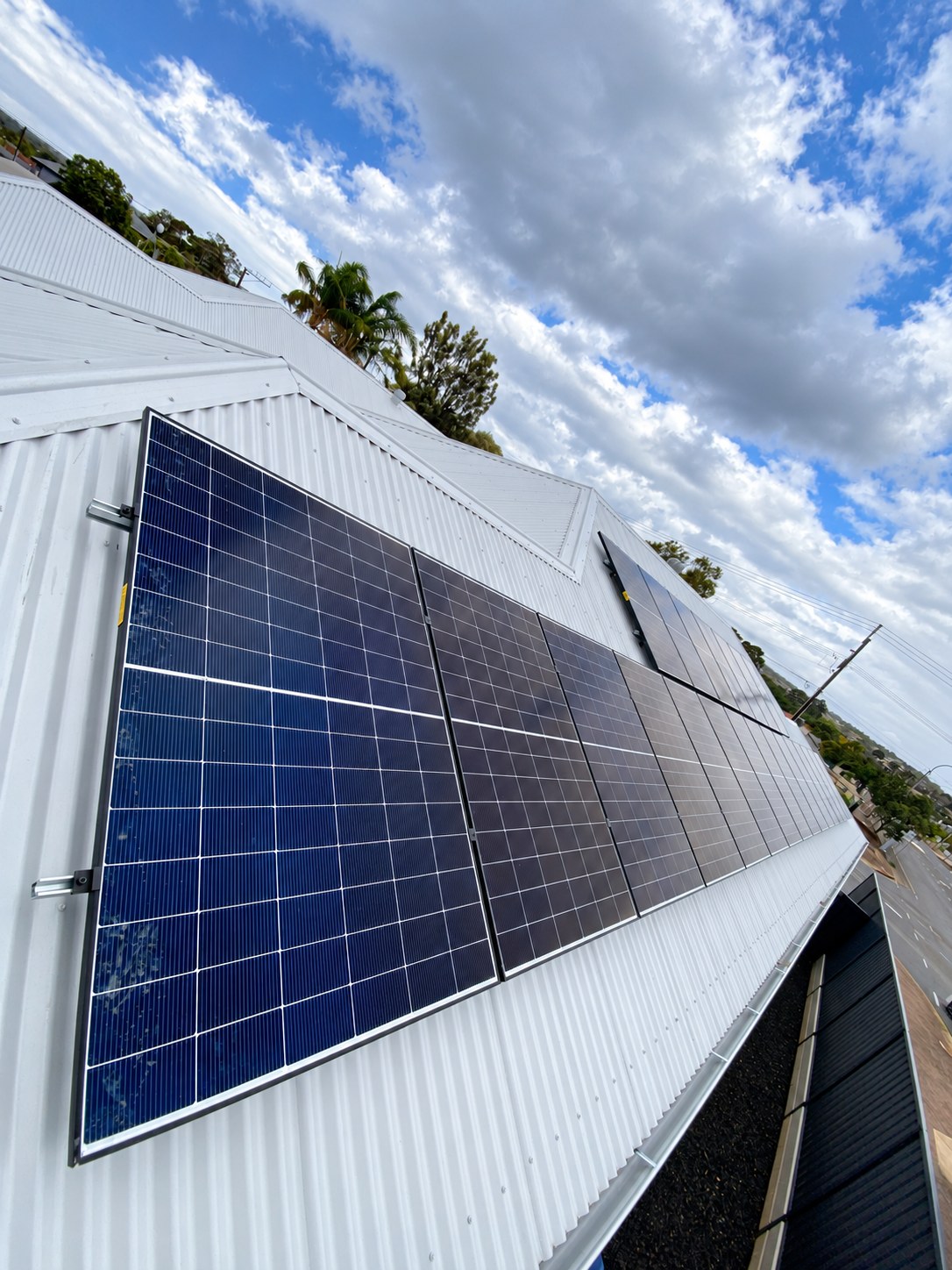
The supplied project story describes an unshaded metal roof with north- and south-facing sections. The solar array was designed for this home, rather than copied from a standard package.
Photograph of the installed rooftop array. Battery operation and EV charging times are not established by the photographs or bills.
03 / The actual bills
The new home’s 27 June–26 September 2026 statement covers 92 days. The charges and solar export credits below add up to $91.49 for that period. A $1.32 credit already on the account brought the amount to pay to $90.17.
New charges · 92 days
$91.49
Less $1.32 already credited to the account = $90.17 to pay.
This is the household’s actual statement, not a savings forecast. It records 19.15kWh imported from the grid and about 1,943.7kWh exported during this period. Grid imports are not the home’s total electricity use.
| Measure | Previous rental | New home · first bill | New home · later bill |
|---|---|---|---|
| Billing dates | 19 Nov 2025–20 Feb 2026 | 27 Mar–26 Jun 2026 | 27 Jun–26 Sep 2026 |
| Days billed | 94 | 92 | 92 |
| New charges | $934.14 | $203.05 | $91.49 |
| Amount to pay | $934.14 | $203.05 | $90.17 after $1.32 credit |
The rental had no solar and was a different property. The first new-home statement included $108.82 in connection and metering charges. These statements document the family’s experience; changes in property, season, retailer and one-off fees prevent a like-for-like savings calculation.
04 / The Sunterra approach
For this family, the move created a clear moment to plan the roof, storage and car charging together, with the home’s daily routine at the centre.
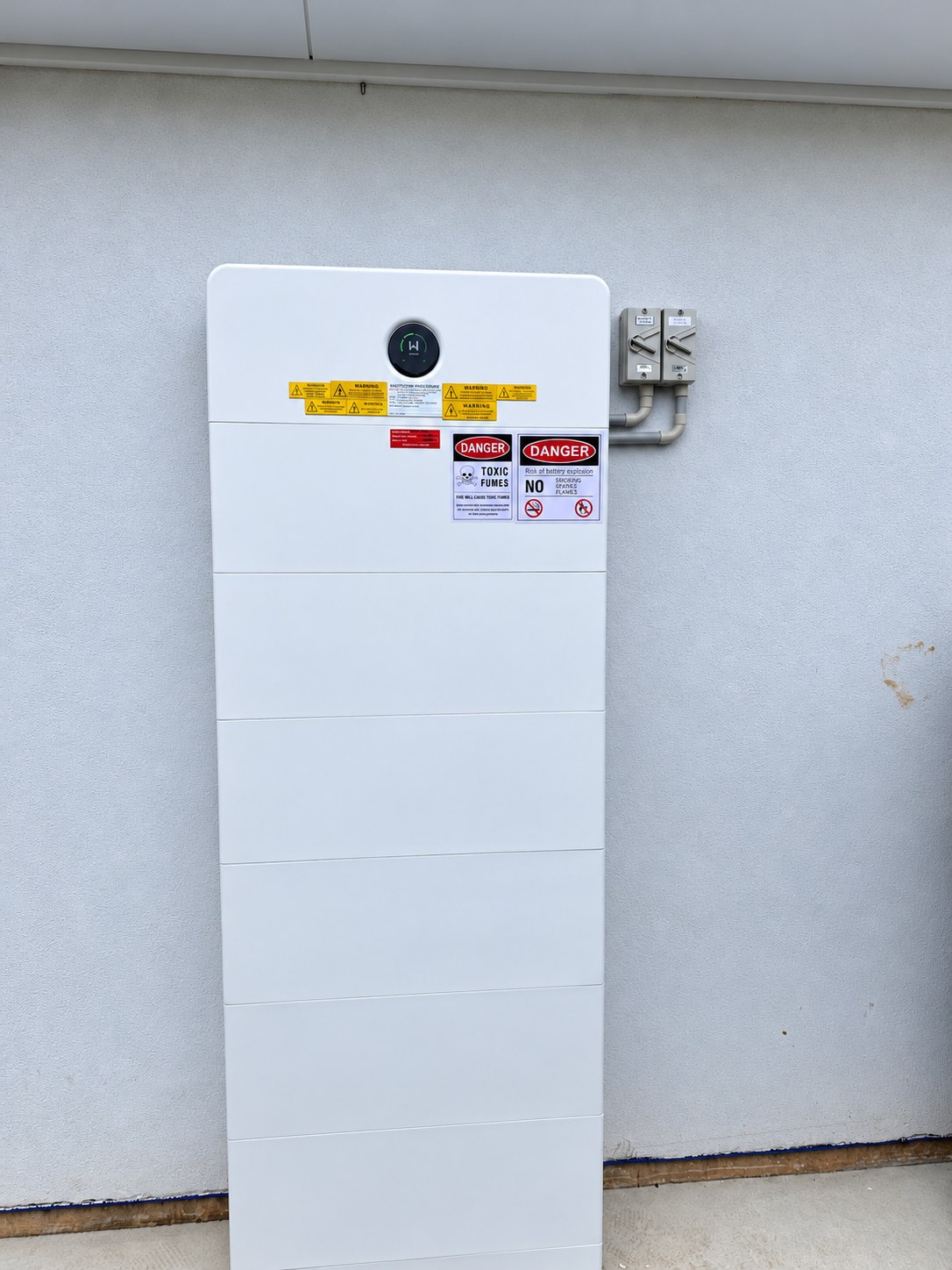
The installation brought together the solar array, six GoodWe battery modules, a hybrid inverter and a dedicated EV charger. The close-up shows the real battery at this home; it does not by itself establish backup capability or a particular charging pattern.
Start with a recent bill, the roof and the times people are home or on the move.
Consider solar, storage and EV charging together, including capacity, budget and electrical compatibility.
Read the bill carefully: supply charges, usage, export credits and any one-off items all affect the amount to pay.
05 / Could it work for you?
No. It is the amount imported from the grid during the later 92-day billing period. The bill does not measure all the electricity the home used from its own solar and battery.
No direct savings figure follows from these statements. The family moved to a different property, the bills cover different seasons and the first new-home statement includes one-off fees. They show real bills, not a controlled before-and-after test.
Not necessarily. Roof, household demand, EV use, equipment, tariff and weather differ. The right design and future bill need to be assessed for your own home.
The supplied bills and photographs do not establish backup scope. Ask for supported circuits, power limits and reserve settings to be specified in any proposed design.
Your home · Your energy plan
Start a solar, battery and EV charging conversation with Sunterra.
Or call 1800 312 979
