Existing solar
The rooftop system was already serving the home, so the project focused on extending its usefulness rather than replacing it.

A real household · South Australia
This two-person household already had rooftop solar. Adding storage was a way to better support the heating, cooling and evening electricity they relied on every day.
See the actual bills ↓Explore the upgrade

01 / The home & the upgrade
One person was at home through the day, and heating and cooling mattered in every season.
Winter evenings were particularly demanding. The home’s existing solar generated during daylight, but the family still bought electricity from the grid after the sun went down. Their goal was to keep ordinary routines comfortable, not to time every task around a tariff.
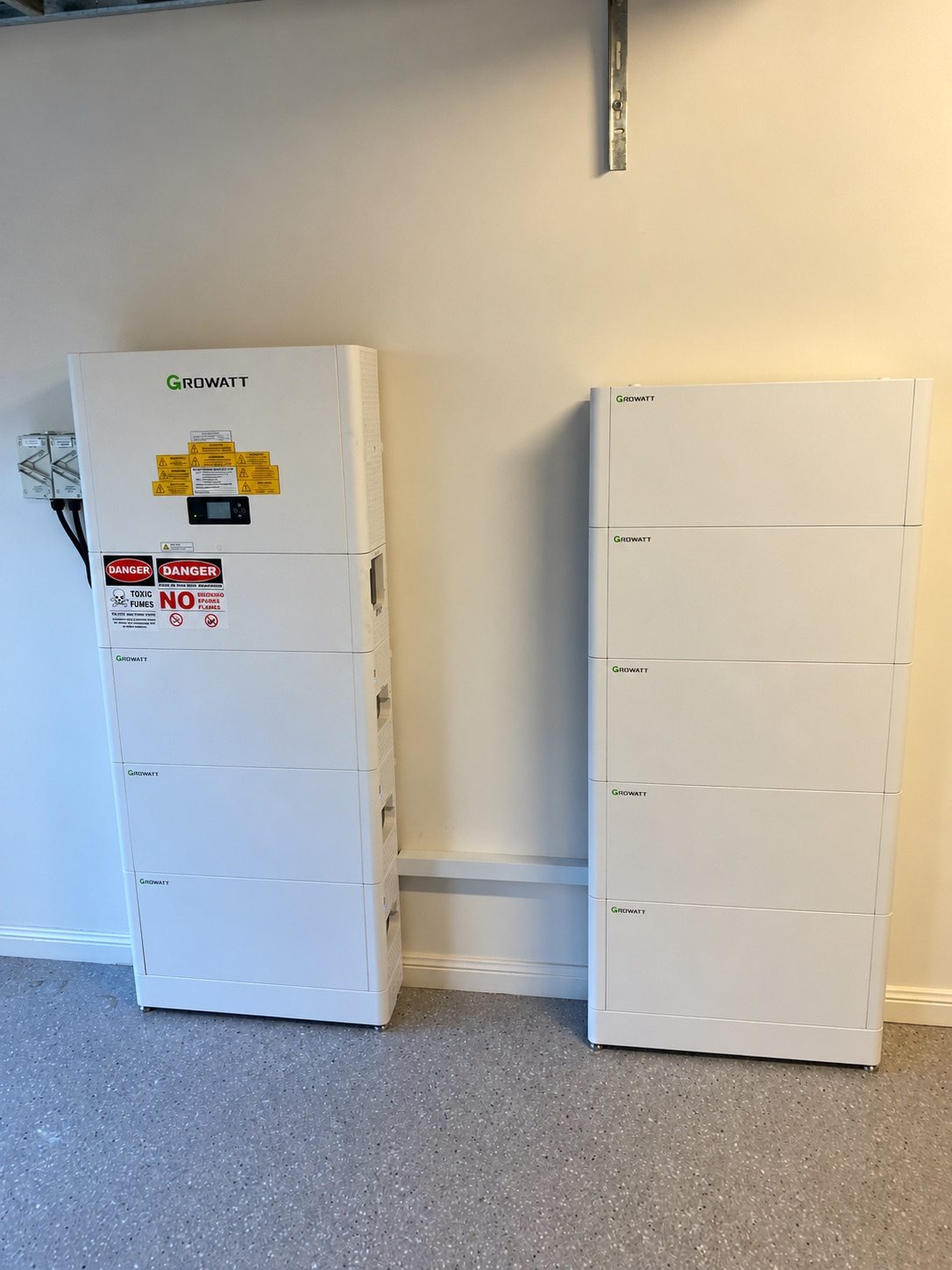
The installed solution · 7 August 2025
The north- and west-facing metal roof already held a substantial solar system; Sunterra did not install those panels. Sunterra added eight Growatt ALP battery modules and a hybrid inverter to help make the home’s own generation available beyond daylight hours.
Backup capability was also part of the family’s decision. Its exact circuits and operating limits are not established by these bills.
02 / Why timing matters
The family did not want to ration heating or rearrange the day. Storage addressed the gap between when the roof generated electricity and when comfort was needed.
The rooftop system was already serving the home, so the project focused on extending its usefulness rather than replacing it.
The added battery created another way to use available solar when the household’s demand continued into the evening.
Heating and cooling needs do not always fit a cheap tariff window. The solution was planned around the household’s routine.
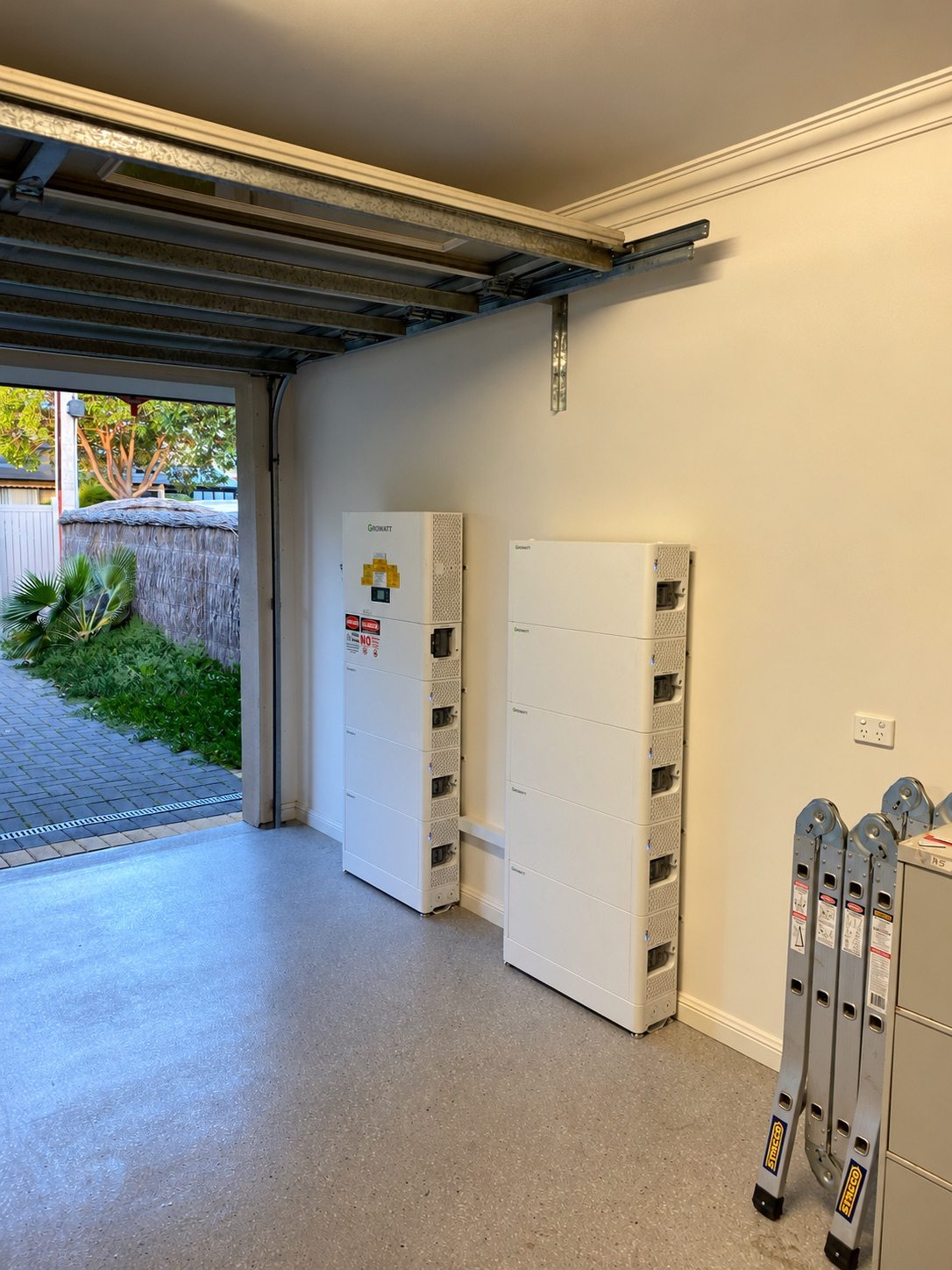
The real installation
The garage photograph shows the inverter and battery towers at this home. The bills can show grid purchases and charges, but they cannot show exactly when the battery charged or discharged.
Nominal capacity is not usable energy. Backup scope depends on the final equipment, wiring and settings.
03 / The actual bills
The 2026 winter statement covers 18 June–17 September, the same 92 calendar days as the supplied 2025 statement. There was no balance brought forward in 2026, so this period’s bill and the amount to pay were both $728.04.
This bill · amount to pay
$728.04
All listed line-item amounts include GST. The home bought about 1,152kWh from the grid during this period.
The bills show a $223.30 difference in period totals. This is not a controlled measure of battery savings: the 2025 period already included several weeks after the 7 August installation, a $75 government credit applied in 2025, and prices and household use changed.
| Measure | 18 Jun–17 Sep 2025 | 18 Jun–17 Sep 2026 |
|---|---|---|
| Grid electricity imported | 1,788.154kWh | 1,152.424kWh |
| Electricity and supply charges | $1,054.33 | $736.24 |
| Solar export credits | − $27.99 | − $8.20 |
| Government bill relief in this period | − $75.00 | — |
| This bill | $951.34 | $728.04 |
| Account balance shown | $1,026.35, including prior balance | $728.04 |
The 2025 statement brought forward $75 from an earlier balance, which is why its account balance exceeds the $951.34 current-period bill. Solar was already installed before both periods; the battery was added partway through the 2025 period. Rates, supply charges, exports, weather and usage can all affect the comparison.
04 / The Sunterra approach
For this family, the priority was dependable comfort and greater control of when their existing solar could be used. The installation was a measured addition to what was already working.
Look at when people are home, how heating and cooling are used, and which needs cannot easily move to another hour.
Review the current array, inverter and switchboard before designing storage around them.
Discuss backup circuits, handover and after-sales service in detail, alongside price and capacity.
05 / Could it work for you?
No. The solar installation was already at the home. Sunterra added the battery modules and hybrid inverter in August 2025.
No. The 2025 period included around six weeks after the battery installation, and the 2025 bill had a $75 government credit. Tariffs and household use also changed. The bills show what happened, not how much one device alone saved.
It may, depending on your home’s energy use, solar generation, battery sizing and settings. An assessment should show how the proposed system fits your own routine.
Backup was important to the family, but the supplied bills and photos do not define its scope. Ask for supported circuits, power limits and reserve settings in any proposed design.
Your home · Your energy plan
Start a solar and battery conversation with Sunterra, built around the way your household lives.
Or call 1800 312 979
