Let the roof work
The 2022 array makes electricity across daylight hours. That first investment remains the centre of the family’s approach.

A real household · Victoria
This family invested in rooftop solar and a small battery in 2022. Two children later, the original system remains in place. Their choice has been to make better use of daytime sunshine before spending on more equipment.
See the actual bills ↓Explore the story

01 / The home & the original investment
Working from home was already part of life when this Victorian household chose Sunterra solar in June 2022. Since then, two children have made the home busier throughout the day.
The family installed a 10.56kW rooftop array, a Growatt hybrid inverter and one 2.56kWh battery module on 16 June 2022. Panels face more than one direction on the tiled roof. The family started with substantial solar generation and a modest amount of storage.
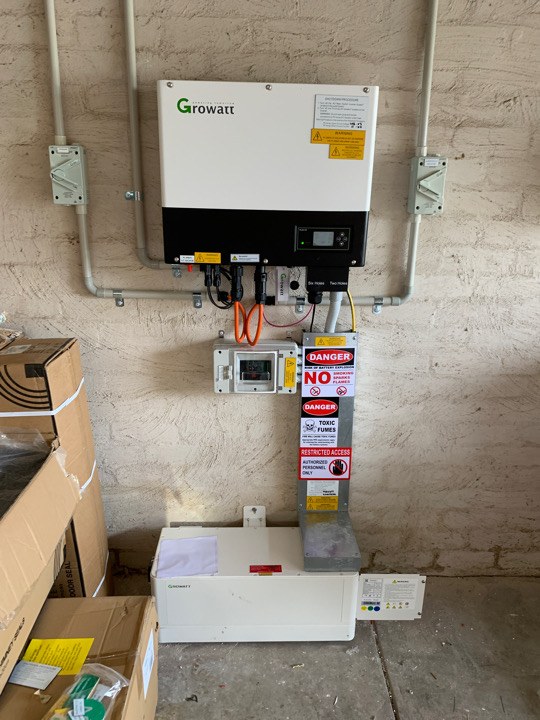
Installed June 2022 · Still in use
Four years later, the family still has the first battery. Even as newer models and incentives became available, they chose to get more value from their 2022 purchase before considering another outlay.
The installation included an EPS control box. Backup depends on system configuration and connected circuits; the supplied documents do not establish a particular blackout backup scope.
02 / Why timing matters
With someone home most days, the household can run the washing machine, dryer and other appliances while the roof is producing electricity. Winter evenings are still their busiest time, but adding more storage has not been their automatic answer.
The 2022 array makes electricity across daylight hours. That first investment remains the centre of the family’s approach.
When practical, the family schedules everyday appliances for the hours when rooftop solar is available.
They can assess a larger battery later against its price, likely use and the value already being delivered by the existing system.
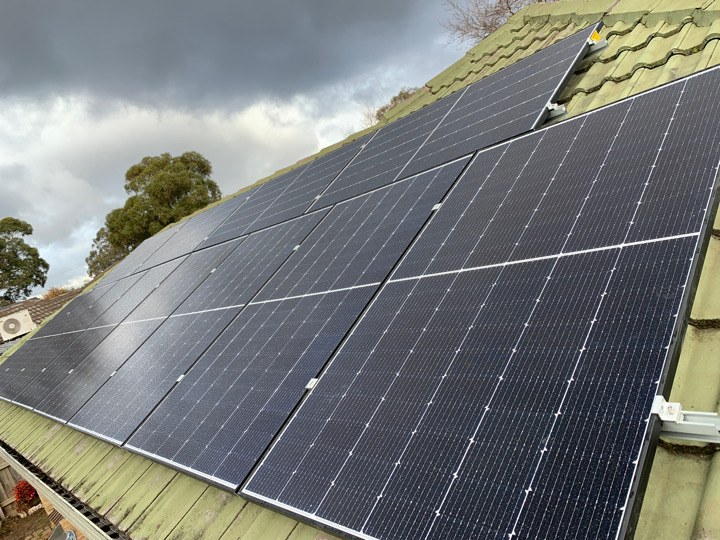
The real rooftop
The August 2026 bill records 356.18kWh sent to the grid. It does not show how much solar the family used directly inside the home, so exports alone cannot measure the array’s full contribution.
The photo shows this household’s installation. Bill figures are historical and depend on the retailer plan and season.
03 / The actual bills
The supplied statements span different seasons and retailers. The clearest recent snapshot is August 2026: $109.83 for 31 days. July was $179.76. Those are separate monthly results, not proof of a year-on-year saving.
August 2026 electricity bill
$109.83
The bill’s $111.61 in charges less its $1.78 feed-in credit. GST is already included in the usage and supply amounts.
Both 2026 bills are electricity only. They do not identify electricity used directly from solar or battery operation. July and August differ in consumption and retailer rates; the difference between the bills cannot be attributed to the solar system alone.
| Period | Grid imports | Solar exports | Electricity result |
|---|---|---|---|
| 12 Oct–8 Nov 2022 · 28 days | 95.64kWh | 435.30kWh | $33.99 billed electricity component; $32.86 after conditional on-time discount |
| 1–31 Jul 2026 · 31 days | 485.64kWh | 210.35kWh | $179.76 electricity bill |
| 1–31 Aug 2026 · 31 days | 281.51kWh | 356.18kWh | $109.83 electricity bill |
The 2022 invoice also included gas charges. Its total amount payable was therefore not an electricity-only figure. The $32.86 is the electricity component after a conditional prompt-payment discount, not the whole invoice. The 2022 and 2026 periods are not same-season comparisons, and prices, feed-in rates and household routines changed.
04 / The Sunterra approach
For this family, value is not measured by having the newest or largest battery. It is measured by whether the system they bought keeps serving the home as life changes.
Understand who is home during daylight, when appliances run and what happens on winter evenings.
Check how the existing array, inverter and battery are performing before paying for an expansion.
Compare usage charges, supply charges and feed-in credits under current tariff terms, not a single headline rate.
05 / Could it work for you?
They work from home and can use appliances while their panels generate electricity. They also wanted to make full use of their original 2022 investment before buying more equipment.
No. It shows 281.51kWh purchased from the grid and 356.18kWh exported. It does not show all electricity generated and used directly in the home.
No. The statements cover different seasons and retailers, and the household’s size and routine changed. A like-for-like savings calculation would need more complete information.
No. An EPS control box was included, but the scope of backup depends on wiring, configuration and connected circuits. Ask for the specific backup arrangement to be confirmed for your home.
Your home · Your energy plan
Talk to Sunterra about using your existing solar well and whether a future upgrade makes sense.
Or call 1800 312 979
